

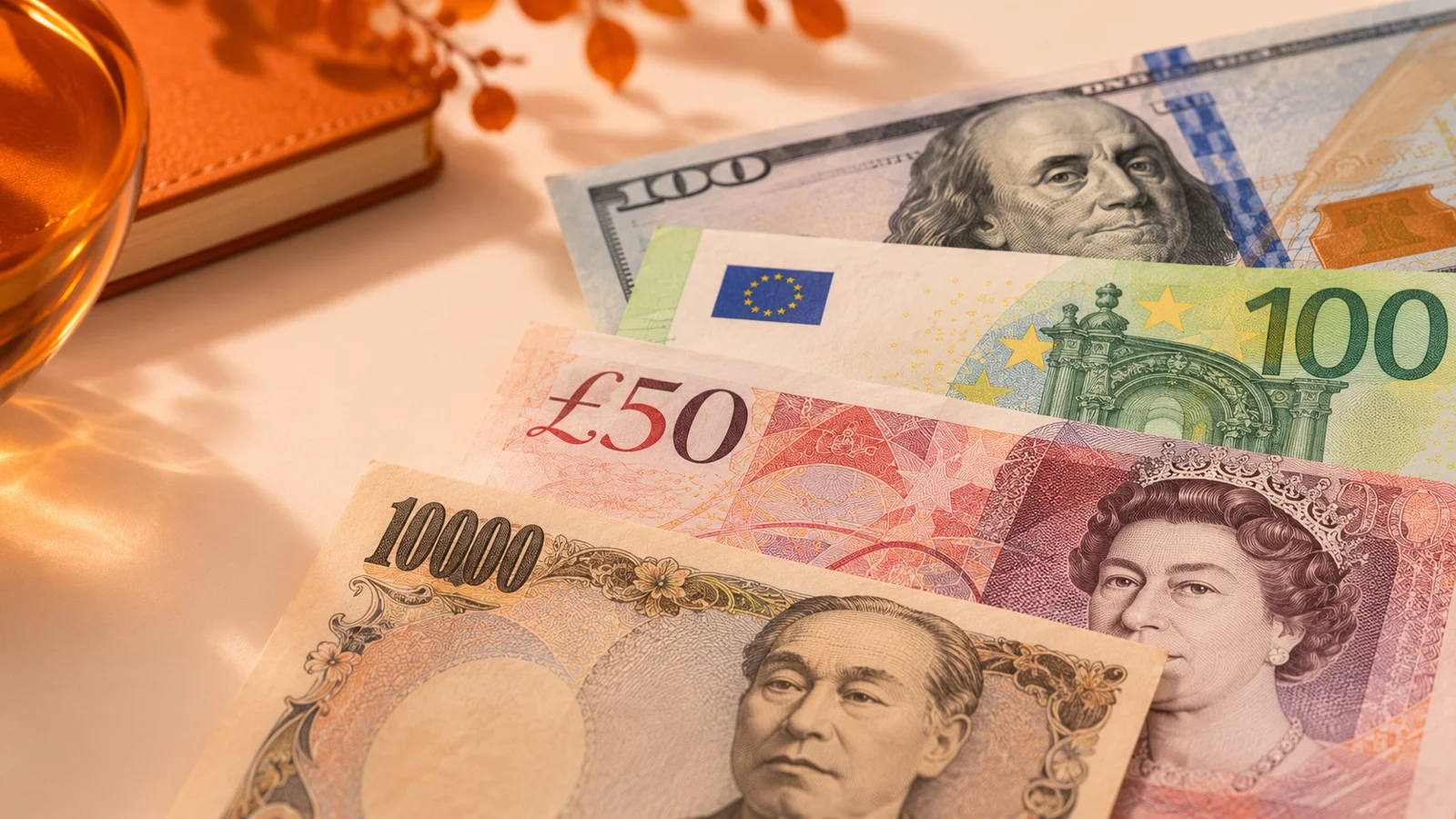
Yen crosses 160 again
The dollar rose above 160 yen for the first time since early September. Reuters reported that the yen weakened briefly to 160.03 per dollar, and Kyodo, cited by Xinhua, said the break came in New York trading overnight. On the data hourly data, USD/JPY touched 160.19 between 06:00 and 07:00 UTC on Friday and fell back to 159.64 within the same hour. It was 159.92 at 10:39 UTC (13:39 Istanbul), with EUR/JPY at 176.77. These are indicative provider snapshots, not executable quotes.
What Tokyo said
"Recent movements in the foreign exchange market have been one-sided and rapid," Finance Minister Satsuki Katayama told her regular news conference on Friday, according to Reuters. "We will continue to work closely with the US Treasury and respond appropriately." She declined to comment on intervention records, InvestingLive reported. On Thursday, Japan's top currency diplomat, Atsushi Mimura, said it was "too early to forget" this summer's intervention.
Why 160 matters
There is no official line at 160, but it is close to where Japan acted before. Japan spent a record 15.4 trillion yen buying its currency on 30 July, 31 July and 3 August, after the yen fell to near 164 per dollar, its weakest in about 40 years, Reuters reported. Citing a New York Fed quarterly report, Reuters added that the US bought 79.4 billion yen on 31 July, funded by euros from the Exchange Stabilization Fund. It was the first US purchase of yen since 1998 and was carried out alongside Tokyo. That is why markets treat any mention of the US Treasury as a reminder that joint action is possible.
The driver: the rate gap
The yen's slide is mainly about interest rates. October US consumer prices rose 0.4% on the month and 0.3% excluding food and energy, the BLS reported on 10 November, and markets now expect the Federal Reserve to raise rates in December. Saxo said one full hike is priced for December, after the US two-year yield rose about 14 basis points on Thursday to 4.88% and the 10-year to near 5.12%. The Bank of Japan, by contrast, kept its policy rate at around 1.25% on 30 October in an 8–1 vote, although one board member proposed a rise to 1.5%. A wider gap between US and Japanese yields makes holding yen less attractive.
Euro area growth confirmed at 0.4%
Eurostat's flash estimate, published at 10:00 UTC, showed euro-area GDP up 0.4% in the third quarter from the second, after 0.6%, and 1.3% from a year earlier. Employment was flat on the quarter and 0.4% higher than a year ago. Germany grew 0.2% and Spain 0.6%, Italy was flat and France shrank 0.1%. The figures matched the preliminary estimate of 30 October, and the euro barely reacted: EUR/USD has traded between 1.1051 and 1.1074 on Friday and was 1.1057 at 10:38 UTC, near the 19-month low around 1.1050 that Saxo noted.
The dollar and gold
The US Dollar Index stood at 103.21 at 10:29 UTC, and Gold API showed spot gold at $3,898.72 an ounce at 10:39 UTC. If Japan does intervene, it would sell dollars to buy yen, which can weigh on the dollar for a time. How long any such effect lasts generally depends on whether the interest-rate gap behind the move also narrows, so warnings on their own may not change the trend.
What to watch next
US producer prices for October are due today at 8:30 a.m. ET (13:30 UTC, 16:30 Istanbul), per the BLS schedule. Japan's first estimate of third-quarter GDP follows at 23:50 UTC on Sunday 15 November (02:50 Istanbul on Monday), and Fed Chair Kevin Warsh gives opening remarks at a San Francisco Fed conference on 16 November at 12:00 p.m. ET (17:00 UTC). This article is educational and is not a trading recommendation.
Sources (13)
- Reuters (via 104.9 The Wolf) — Japan's finance minister vows action as yen breaches 160 threshold
- Xinhua (citing Kyodo) — Japan's finance minister warns of action to stem yen slide if necessary
- InvestingLive — Japan's Katayama warns of one-sided yen moves near 160, will coordinate with US Treasury
- Eurostat — GDP and employment flash estimates for the third quarter of 2026
- BLS — Consumer Price Index, October 2026
- InvestingLive — BoJ keeps policy rate unchanged at 1.25%, as expected
- Saxo — Market Quick Take, 13 November 2026
- BLS — Schedule of releases for the Producer Price Index
- Federal Reserve Board — Calendar: November 2026
- Yahoo Finance — USD/JPY hourly
- Yahoo Finance — EUR/JPY and EUR/USD
- Yahoo Finance — US Dollar Index
- Gold API — XAU spot
Trading carries a high risk of loss. This content is for information and education only and is not investment advice.